Post-"Portrait of the Artist as a Young Man" thoughts on James Joyce --
1) I now realize I need to re-read "Dubliners" and "Portrait" with some sort of guide.
2) And definitely get a guide for "Ulysses", which is where all this mandatory Joyce reading is heading.
3) I am okay with never reading past page 7 of "Finnegan's Wake".
I don't have anything insightful or profound to say about "Portrait" except to say that the middle sermon section WILL KILL YOU. So many naps. And once you get past that, just wait for the end aesthetic argument. The intro to my copy of the book (one Hugh Kenner) discusses how "Portrait" follows in writing the maturing of Stephen Dedalus (aka Joyce), with sections either mimicking his consciousness or as models of writing he would admire at a particular age. The sermon then being his time of piousness and the philosophical argument when he's attending the university and agnostic. There's a ton of other crafty information hidden away in the text and structure, like how odd-numbered chapters deal with father figures and even-numbered chapters with women, but this stuff is totally missed during a first naive reading (see thought #1 above). On the ole' "experimental fiction and bildungsroman" scale, I will say that "Portait" > "The Bell Jar" and it's not even a fair comparison. Reading Joyce always makes me feel like I'm missing half the pieces needed to comprehend the whole story (because I am), which is a nice humbling experience.
This book also left me wondering: did Joyce really sleep with that many women before he was 16?! I always pictured him as this nerdy guy ... Pre-sermon section, things are pretty dark.
Sunday, March 17, 2013

Thursday, February 21, 2013
On Plagues
About halfway through Camus' The Plague I realized that the same disease had just cropped up in Death in Venice and I'd recently watched the AIDS documentary How to Survive a Plague, so clearly this was subconscious word association at work. If you really want to extend the metaphor/relevance of this novel, substitute "AIDS" for "plague". And check out my earlier entry on Karl Marlantes' Matterhorn because oh man, parallels.
 Some background/context: I've written about Camus on here before (Notebooks & "Reflections on the Guillotine") and most of The Plague can --and should be-- read through the lens of "Reflections", no pun intended. Also, at one point in the book Camus does this sneaky little allusion to his most famous work, The Stranger: "A young commercial employee had killed an Algerian on a beach," (51) and the whole rest of the novel I kept wondering if Cottard was somehow an escaped character from The Stranger. I see what you did there.
Sprinkled throughout the book are heavy philosophical flavors -- Foucault's prison system and Sartre's existentialism jumped out (Camus' contemporaries). The entire town of Oran, both before and during the plague, is a prison. It just becomes more obvious when the plague hits and the gates to the town are sealed with guards. A social prison becomes a real prison, where all the inhabitants are on a fast-track trial with a possible death sentence waiting. The first few chapters establish the power of the status quo and a familiar exceptionalism: surely the plague can't happen here, surely I won't get the disease, horrible things like that happen to an "other" but not to me. Even though piles of rats are dying in the streets, people still go about their habits and the city continues in its routine; menace is masked by normalcy. This isn't a new concept and you can reliably find it in horror movies. (I always think of the baby on the plane in the opening scene of Final Destination.) Camus adds another layer to it with meaningless communication and menace masked by jargon: "We are to take the responsibility of acting as though the epidemic were plague" (47).
So now we're presented with the meat of the novel, which is the reaction of several townspeople to being trapped in this prison-city with a raging plague epidemic for a year. Dr. Rieux fits the Camus character description offered up by Susan Sontag in her critical essay on Notebooks: "noble, stoical, at the same time detached and compassionate ... the attitude ... is a transcendence of the event [instead of a response or solution to it]." At the height of the plague, Rieux compares his role to a judge: "To detect, to see, to describe, to register, and then condemn - that was his present function." Here's where "Reflections on the Guillotine" comes in -- Camus' arguments against the death penalty fit into Rieux and company's decision to risk staying in the city and keep trying to help/heal, that he owes it to his fellow human beings. (Matterhorn: "Dying this way was a better way to die because living this way was a better way to live.") His friend Tarrou tells a story about a defendent up for the death penalty:
"The only picture I carried away with me of that day's proceedings was a picture of the criminal. I have little doubt he was guilty -- of what crime is no great matter ... You've understood -- he was a living human being."
(224)
In a similar vein, Rieux has this to say in response to a sermon that paints suffering as divine punishment and a path to salvation:
"He hasn't come in contact with death; that's why he can speak with such assurance of the truth -- with a capital T. But every country priest who visits his parishioners and has heard a man gasping for breath on his deathbed thinks as I do. He'd try to relieve human suffering before trying to point out its excellence."
(116)
A key scene in the novel involves the drawn-out death of a child, and the various characters grappling with how to come to terms with such a thing. The issue of evil and human suffering really reminded me of Matterhorn's best moments and I think that novel actually found a better way of dealing with 'how can God exist when evil things happen to good people'. So, let's fuse the two books for a moment:
The Plague: "It was wrong to say: "This I understand, but that I cannot accept"; we must go straight to the heart of that which is unacceptable, precisely because it is thus that we are constrained to make our choice." (203)
Matterhorn: "I see my friend Broyer get his face ripped off by a mine. What you think I do all night, sit around thankin' Sweet Jesus? Raise my palms to sweet heaven and cry hallelujah? You know what I do? You know what I do? I lose my heart. ... Then, the sky turn gray again in the east, and you know what I do? I choose all over to keep believin'. All along I know Jesus could maybe be just some fairy tale, and I could be just this one big fool. I choose anyway. ... It ain't no easy thing."
(466)
It ain't no easy thing.
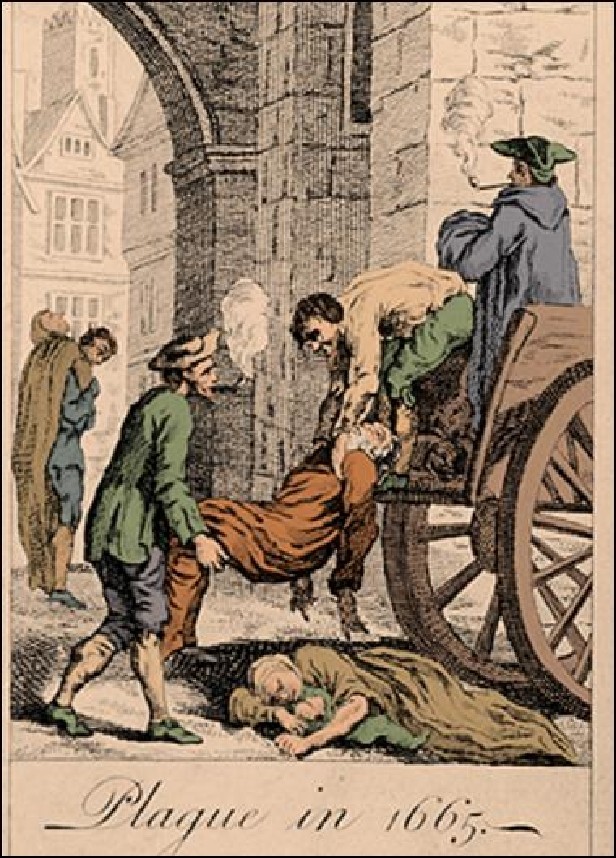
Sprinkled throughout the book are heavy philosophical flavors -- Foucault's prison system and Sartre's existentialism jumped out (Camus' contemporaries). The entire town of Oran, both before and during the plague, is a prison. It just becomes more obvious when the plague hits and the gates to the town are sealed with guards. A social prison becomes a real prison, where all the inhabitants are on a fast-track trial with a possible death sentence waiting. The first few chapters establish the power of the status quo and a familiar exceptionalism: surely the plague can't happen here, surely I won't get the disease, horrible things like that happen to an "other" but not to me. Even though piles of rats are dying in the streets, people still go about their habits and the city continues in its routine; menace is masked by normalcy. This isn't a new concept and you can reliably find it in horror movies. (I always think of the baby on the plane in the opening scene of Final Destination.) Camus adds another layer to it with meaningless communication and menace masked by jargon: "We are to take the responsibility of acting as though the epidemic were plague" (47).
So now we're presented with the meat of the novel, which is the reaction of several townspeople to being trapped in this prison-city with a raging plague epidemic for a year. Dr. Rieux fits the Camus character description offered up by Susan Sontag in her critical essay on Notebooks: "noble, stoical, at the same time detached and compassionate ... the attitude ... is a transcendence of the event [instead of a response or solution to it]." At the height of the plague, Rieux compares his role to a judge: "To detect, to see, to describe, to register, and then condemn - that was his present function." Here's where "Reflections on the Guillotine" comes in -- Camus' arguments against the death penalty fit into Rieux and company's decision to risk staying in the city and keep trying to help/heal, that he owes it to his fellow human beings. (Matterhorn: "Dying this way was a better way to die because living this way was a better way to live.") His friend Tarrou tells a story about a defendent up for the death penalty:
"The only picture I carried away with me of that day's proceedings was a picture of the criminal. I have little doubt he was guilty -- of what crime is no great matter ... You've understood -- he was a living human being."
(224)
In a similar vein, Rieux has this to say in response to a sermon that paints suffering as divine punishment and a path to salvation:
"He hasn't come in contact with death; that's why he can speak with such assurance of the truth -- with a capital T. But every country priest who visits his parishioners and has heard a man gasping for breath on his deathbed thinks as I do. He'd try to relieve human suffering before trying to point out its excellence."
(116)
A key scene in the novel involves the drawn-out death of a child, and the various characters grappling with how to come to terms with such a thing. The issue of evil and human suffering really reminded me of Matterhorn's best moments and I think that novel actually found a better way of dealing with 'how can God exist when evil things happen to good people'. So, let's fuse the two books for a moment:
The Plague: "It was wrong to say: "This I understand, but that I cannot accept"; we must go straight to the heart of that which is unacceptable, precisely because it is thus that we are constrained to make our choice." (203)
Matterhorn: "I see my friend Broyer get his face ripped off by a mine. What you think I do all night, sit around thankin' Sweet Jesus? Raise my palms to sweet heaven and cry hallelujah? You know what I do? You know what I do? I lose my heart. ... Then, the sky turn gray again in the east, and you know what I do? I choose all over to keep believin'. All along I know Jesus could maybe be just some fairy tale, and I could be just this one big fool. I choose anyway. ... It ain't no easy thing."
(466)
It ain't no easy thing.
Tuesday, February 5, 2013
Somnolence in Venice & Mann's Boy
Translation woes strike again! By my estimate, Kenneth Burke's translation of Thomas Mann's Death in Venice caused me to start this book no less than four times and fall asleep approximately every five pages (in a 96-page novella). The heavy allegorical aspect didn't help things. "Should we not perish and be consumed with love, as Semele once was with Zeus?" ... Yikes. To each their own, but this didn't do much for me.
As per the usual, I had heard of the title and author but did this as a "naive reading". So this whole 'OMG he's a homosexual pedophile!?' plot caught me off-guard. It's as though Lolita got passed off as an extended mythological metaphor/allegory and was published in 1924. That being said, it's more Victorian-esque with regard to the romanticism of the child (children are innocent and the ideal of pure beauty, etc, etc) and Mann uses Tadzio (the 'youthful beauty') as a symbol rather than an actual character. The story can be interpreted six ways to Sunday, most obviously through the constant mythological name-dropping (Apollo to Dionysus transition -- discuss!) and the blatant autobiographical elements that weirdly combine Mann's vacation with the death of composer Gustav Mahler. See: Just How Gay is Death in Venice?
To be frank, I didn't enjoy this book. The emphasis on classicism and 'cold' storytelling (objective narrator) may be to blame. I haven't gotten to a point where I'm willing to set down a book and go look up the traits of Apollo in order to understand a poorly translated and especially dry paragraph of text. I'm okay with that. I'm not against taking the time to do a Freudian or Nietzschian close reading, I just can't bring myself to go back and do that here. Nor do I presume to know enough Freud/Nietzsche to attempt it.
This blog sums up my general reaction: "Death in Venice ... through the use of complex metaphors, is essentially a rigid, damp love letter to a small half-naked boy the narrator leers at throughout."
I have two other Thomas Mann books on my canonical reading list, so we'll see how he holds up later.
As per the usual, I had heard of the title and author but did this as a "naive reading". So this whole 'OMG he's a homosexual pedophile!?' plot caught me off-guard. It's as though Lolita got passed off as an extended mythological metaphor/allegory and was published in 1924. That being said, it's more Victorian-esque with regard to the romanticism of the child (children are innocent and the ideal of pure beauty, etc, etc) and Mann uses Tadzio (the 'youthful beauty') as a symbol rather than an actual character. The story can be interpreted six ways to Sunday, most obviously through the constant mythological name-dropping (Apollo to Dionysus transition -- discuss!) and the blatant autobiographical elements that weirdly combine Mann's vacation with the death of composer Gustav Mahler. See: Just How Gay is Death in Venice?
To be frank, I didn't enjoy this book. The emphasis on classicism and 'cold' storytelling (objective narrator) may be to blame. I haven't gotten to a point where I'm willing to set down a book and go look up the traits of Apollo in order to understand a poorly translated and especially dry paragraph of text. I'm okay with that. I'm not against taking the time to do a Freudian or Nietzschian close reading, I just can't bring myself to go back and do that here. Nor do I presume to know enough Freud/Nietzsche to attempt it.
This blog sums up my general reaction: "Death in Venice ... through the use of complex metaphors, is essentially a rigid, damp love letter to a small half-naked boy the narrator leers at throughout."
I have two other Thomas Mann books on my canonical reading list, so we'll see how he holds up later.
Sunday, December 9, 2012
Run Through the Jungle
"Matterhorn" was a book that floated onto my shelf gradually (mentioned somewhere by someone, idly bought at Target of all places) and stayed there for almost a year, the subject of yearning glances while I slogged through a particularly thick 'to read' priority pile. So. AT LAST! I'll say that for all the build-up, the novel moved along briskly and used a "show, don't tell" approach where Marlantes didn't beat me over the head with philosophical interludes. As with any novel that deals with war, in this case Vietnam, it was a sobering yet necessary reflection on ugly things. Author bio (not sure why Bill Moyer is more complete than Wikipedia): Karl Marlantes
It wasn't until I assembled my quote list for this post that I realized the emphasis on choice and decisions throughout the novel. Yes, there are grander important themes like the insanity of war and what is honor and who is the enemy, but these particular passages jumped out and made me pause. Here's a character/author who's endured horrific conditions and in the midst of senseless misery you see these nuggets of courage, faith, and belief in humanity -- why keep going, how to keep going. I'm not going to get into details about the book or close-read shit in this post, other than to say it reminded me of Catch-22/Apocalypse Now/Platoon. And some parts will absolutely sucker-punch you in the gut.
"He would not slip into the jungle and save himself, because that self didn't look like anything worth saving. ... Dying this way was a better way to die because living this way was a better way to live."
(399-400)
"No, the jungle wasn't evil. It was indifferent. So, too, was the world. Evil, then, must be the negation of something man had added to the world. Ultimately, it was caring about something that made the world liable to evil. ... Without man there would be no evil. But there was also no good, nothing moral built over the world of fact."
(500)
"Meaning could come only from his choices and actions. Meaning was made, not discovered. ... What he did and thought in the present would give him the answer, so he would not look for answers in the past or future."
(564)
"I see my friend Broyer get his face ripped off by a mine. What you think I do all night, sit around thankin' Sweet Jesus? Raise my palms to sweet heaven and cry hallelujah? You know what I do? You know what I do? I lose my heart. ... Then, the sky turn gray again in the east, and you know what I do? I choose all over to keep believin'. All along I know Jesus could maybe be just some fairy tale, and I could be just this one big fool. I choose anyway. ... It ain't no easy thing."
(466)
 |
| Ray Mahon - Stars and Stripes South Vietnam, October, 1966: A helicopter approaches the landing zone to deliver supplies and evacuate U.S. Marines wounded in the battle for Hill 484. |
It wasn't until I assembled my quote list for this post that I realized the emphasis on choice and decisions throughout the novel. Yes, there are grander important themes like the insanity of war and what is honor and who is the enemy, but these particular passages jumped out and made me pause. Here's a character/author who's endured horrific conditions and in the midst of senseless misery you see these nuggets of courage, faith, and belief in humanity -- why keep going, how to keep going. I'm not going to get into details about the book or close-read shit in this post, other than to say it reminded me of Catch-22/Apocalypse Now/Platoon. And some parts will absolutely sucker-punch you in the gut.
"He would not slip into the jungle and save himself, because that self didn't look like anything worth saving. ... Dying this way was a better way to die because living this way was a better way to live."
(399-400)
"No, the jungle wasn't evil. It was indifferent. So, too, was the world. Evil, then, must be the negation of something man had added to the world. Ultimately, it was caring about something that made the world liable to evil. ... Without man there would be no evil. But there was also no good, nothing moral built over the world of fact."
(500)
"Meaning could come only from his choices and actions. Meaning was made, not discovered. ... What he did and thought in the present would give him the answer, so he would not look for answers in the past or future."
(564)
"I see my friend Broyer get his face ripped off by a mine. What you think I do all night, sit around thankin' Sweet Jesus? Raise my palms to sweet heaven and cry hallelujah? You know what I do? You know what I do? I lose my heart. ... Then, the sky turn gray again in the east, and you know what I do? I choose all over to keep believin'. All along I know Jesus could maybe be just some fairy tale, and I could be just this one big fool. I choose anyway. ... It ain't no easy thing."
(466)
Sunday, November 4, 2012
Don't Mess with Alaska, and other lessons
Before I do a little blurb about Jon Krakauer's "Into the Wild", I have to link here (Grizzly Man) because it's a strikingly similar story and Werner Herzog is the shit.

In Search of the Miraculous:
"Is there anybody out there still experiencing anything besides somebody else's book commenting on somebody else's book? Where do we turn to find the experience—preverbal, nonverbal, subverbal, transverbal—on which the books and reports must finally be based?"
Aside from the obvious irony that I'm commenting on Krakauer's book commenting on the above quote, Roszak totally has a point. Though as a literature lover, I have to argue that the experience of reading a great book or a classic has merits -- if I had a choice between traveling the world and reading a library, I'd do both. Do you really need to have been on a whaling ship to understand Moby Dick? No. And even if you had been, the book isn't really about whaling, in the same way that Lord Jim isn't about Indonesia. I guess in answer to Roszak's question, you could turn to find experience anywhere (where is there greed, where is there racism -- with regard to Moby Dick/Lord Jim examples).
Now quoting Krakauer:
"[Chris] was so enthralled by these tales, however, that he seemed to forget they were works of fiction, constructions of the imagination that had more to do with [Jack] London's romantic sensibilities than with the actualities of life in the subarctic wilderness." (44)
Ah! So, he turns to find the experience in the wild, but ... the book's not really based on life in the wild. No matter. The ordeal is an exercise in solitude, based on the latter part of Tolstoy's life (who may I add died alone at a train station -- perhaps not the best role model for hermitage), and a weirdly selfish venture. I had a more visceral "WTF" reaction to McCandless' story when I watched the movie adaptation a few years back, and I think Krakauer's writing was more understanding and empathetic because I found my position softening a little. But only a little. For a guy that was so interested in humanitarian crises and social injustice in the world (e.g. food shortage in Africa), he was remarkably self-absorbed. Like the cliche, "Be the change you wish to see in the world" -- kinda hard if you remove yourself from society and the world.
Krakauer notes that Chris was "relieved that he had again evaded the impending threat of human intimacy, of friendship, and all the messy emotional baggage that comes with it ..." (55). For a student of Tolstoy, he was pretty anti-social -- because really "War & Peace" is an epic generation-long love story. And of all experiences, isn't human intimacy the most difficult?
And then this moment, which just broke my heart:
"When Alex left for Alaska," Franz remembers, "I prayed. I asked God to keep his finger on the shoulder of that one; I told him that boy was special. But he let Alex die. So on December 26, when I learned what happened, I renounced the Lord. I withdrew my church membership and became an atheist. I decided I couldn't believe in a God who would let something that terrible happen to a boy like Alex ... [I] bought a bottle of whiskey. And then I went out into the desert and drank it. I wasn't used to drinking, so it made me sick. Hoped it'd kill me, but it didn't. Just made me real, real sick." (60)
"Such bereavement, witnessed at close range, makes even the most eloquent apologia for high-risk activities ring fatuous and hollow." (132)
Bottom Line: I suppose that gets at the heart of why I always find his story so ingratiating and tragic. Like, go travel through Mexico and live off the Alaskan land if that's what it takes to have a revelation about life, but to have impacted others lives so negatively is sad. I love Jack Kerouac because while he zoomed around the continent, he did it with friends and always sent his mom postcards. He also penned several influential books and did not starve to death alone (with the nuance that it was slow alcoholism).

In Search of the Miraculous:
"Is there anybody out there still experiencing anything besides somebody else's book commenting on somebody else's book? Where do we turn to find the experience—preverbal, nonverbal, subverbal, transverbal—on which the books and reports must finally be based?"
Aside from the obvious irony that I'm commenting on Krakauer's book commenting on the above quote, Roszak totally has a point. Though as a literature lover, I have to argue that the experience of reading a great book or a classic has merits -- if I had a choice between traveling the world and reading a library, I'd do both. Do you really need to have been on a whaling ship to understand Moby Dick? No. And even if you had been, the book isn't really about whaling, in the same way that Lord Jim isn't about Indonesia. I guess in answer to Roszak's question, you could turn to find experience anywhere (where is there greed, where is there racism -- with regard to Moby Dick/Lord Jim examples).
Now quoting Krakauer:
"[Chris] was so enthralled by these tales, however, that he seemed to forget they were works of fiction, constructions of the imagination that had more to do with [Jack] London's romantic sensibilities than with the actualities of life in the subarctic wilderness." (44)
Ah! So, he turns to find the experience in the wild, but ... the book's not really based on life in the wild. No matter. The ordeal is an exercise in solitude, based on the latter part of Tolstoy's life (who may I add died alone at a train station -- perhaps not the best role model for hermitage), and a weirdly selfish venture. I had a more visceral "WTF" reaction to McCandless' story when I watched the movie adaptation a few years back, and I think Krakauer's writing was more understanding and empathetic because I found my position softening a little. But only a little. For a guy that was so interested in humanitarian crises and social injustice in the world (e.g. food shortage in Africa), he was remarkably self-absorbed. Like the cliche, "Be the change you wish to see in the world" -- kinda hard if you remove yourself from society and the world.
Krakauer notes that Chris was "relieved that he had again evaded the impending threat of human intimacy, of friendship, and all the messy emotional baggage that comes with it ..." (55). For a student of Tolstoy, he was pretty anti-social -- because really "War & Peace" is an epic generation-long love story. And of all experiences, isn't human intimacy the most difficult?
And then this moment, which just broke my heart:
"When Alex left for Alaska," Franz remembers, "I prayed. I asked God to keep his finger on the shoulder of that one; I told him that boy was special. But he let Alex die. So on December 26, when I learned what happened, I renounced the Lord. I withdrew my church membership and became an atheist. I decided I couldn't believe in a God who would let something that terrible happen to a boy like Alex ... [I] bought a bottle of whiskey. And then I went out into the desert and drank it. I wasn't used to drinking, so it made me sick. Hoped it'd kill me, but it didn't. Just made me real, real sick." (60)
"Such bereavement, witnessed at close range, makes even the most eloquent apologia for high-risk activities ring fatuous and hollow." (132)
Bottom Line: I suppose that gets at the heart of why I always find his story so ingratiating and tragic. Like, go travel through Mexico and live off the Alaskan land if that's what it takes to have a revelation about life, but to have impacted others lives so negatively is sad. I love Jack Kerouac because while he zoomed around the continent, he did it with friends and always sent his mom postcards. He also penned several influential books and did not starve to death alone (with the nuance that it was slow alcoholism).
Subscribe to:
Posts (Atom)